
How to Prevent Frozen and Burst Pipes in Lawton This Winter
Lawton winters are mild most of the time, which is exactly why frozen pipes catch people off guard. Many homes here were built with plumbing in exterior walls, attics, crawlspaces and garages, and when an arctic front drops temperatures well below freezing for a night or two, those pipes are the first to go.
A frozen pipe is a problem. A burst pipe is a disaster: it can release a large amount of water in a short time, often in a wall or ceiling where you cannot see it right away. A little preparation before the cold arrives prevents most of these calls.
Which pipes are most at risk
- Pipes in exterior walls, especially on the north side of the house
- Pipes in unheated crawlspaces, attics and garages
- Outdoor hose bibs and sprinkler lines
- Plumbing under kitchen and bathroom sinks on outside walls
- Water lines in vacant homes, rentals between tenants, and homes left empty during travel or PCS moves
Before a hard freeze
- Disconnect garden hoses and cover outdoor faucets with insulated covers.
- Insulate exposed pipes in crawlspaces, attics and garages with foam pipe sleeves.
- Seal gaps and vents that let cold air blow across pipes, without blocking necessary combustion air for appliances.
- Know where your main water shut-off valve is and make sure it turns.
- If you will be away, keep the heat on (many guides suggest no lower than the mid-50s °F) and ask someone to check the house.
During the cold snap
- Let faucets on exterior walls drip slightly — moving water is less likely to freeze.
- Open cabinet doors under sinks so warm air reaches the pipes.
- Keep the thermostat at the same temperature day and night.
- Keep the garage door closed if water lines run through the garage.
If a pipe is frozen
If you turn on a faucet and only a trickle comes out, a pipe may be frozen. Keep the faucet open and gently warm the pipe with a hair dryer, a space heater kept a safe distance away, or warm towels. Never use an open flame. If you cannot find or reach the frozen section, call a licensed plumber.
If a pipe bursts
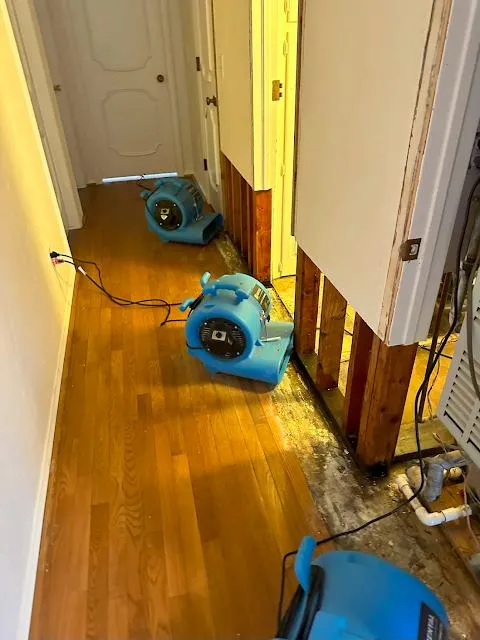
Water from a burst pipe travels under flooring and up into drywall. Even after the visible water is gone, the materials underneath can stay wet for days, which is how mold starts. Professional drying uses moisture meters to confirm the structure is actually dry before repairs begin. See what happens if water damage is left untreated, or learn about our water damage restoration in Lawton.
- Shut off the main water valve immediately.
- Turn off electricity to affected areas if water is near outlets or appliances and it is safe to do so.
- Take photos and video of the damage for your insurance claim.
- Move furniture, rugs and valuables out of the wet area.
- Call a water damage restoration company to extract the water and dry the structure, and a plumber to repair the pipe.
Need help in Lawton right now?
ICR crews respond 24/7 across Lawton, Fort Sill and Comanche County.
Frequently Asked Questions
How cold does it have to be for pipes to freeze?
Pipes in unprotected areas are at risk when outdoor temperatures drop well below freezing, especially for several hours or overnight. Wind and how exposed the pipe is matter as much as the number on the thermometer.
Does homeowners insurance cover burst pipes?
Sudden and accidental water damage from a burst pipe is often covered, but many policies exclude damage if the home was left unheated or the problem developed over time. Check your policy or ask your agent.
This article is general information, not legal or insurance advice. Insurance Claim Restoration is a restoration contractor, not an insurance company; coverage decisions are made by your insurer under your specific policy.