
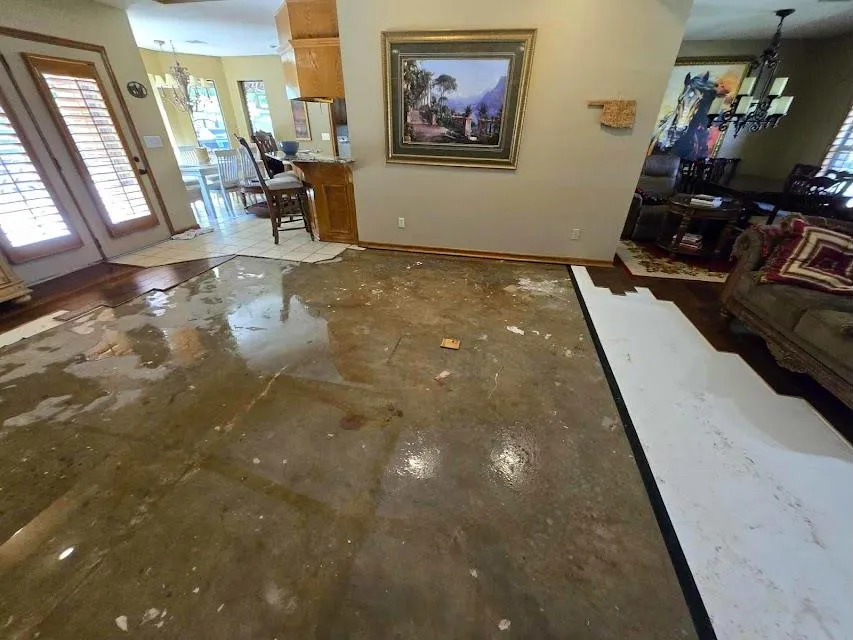
What Happens If Water Damage Is Left Untreated? A Timeline
When water gets into a home, it is tempting to mop up what you can see and hope the rest dries on its own. Unfortunately, water keeps moving into materials long after the surface looks dry, and the damage grows in stages.
Every situation is different — the amount of water, the type of water and the materials involved all matter — but this general timeline shows why restoration professionals push to start drying quickly.
The first hours
Water spreads across floors and wicks up into drywall, baseboards and cabinet bases. Carpet and pad absorb it quickly. Furniture legs can stain carpet, and paper items and photos start to be ruined. This is when extraction does the most good.
Day 1 to 2
Drywall softens and may start to swell or crumble at the bottom. Wood flooring and trim begin to absorb water and can start to cup. A musty smell develops. Under the right conditions, mold can begin growing on wet materials within roughly a day or two.
Days 3 to 7
Mold growth becomes more likely and may become visible. Wood floors may warp or buckle, doors and windows can swell and stick, and metal fasteners can begin to corrode. What might have been dried in place may now need to be removed and replaced.
Beyond a week
Structural materials such as subfloor and framing can be compromised, mold can spread through wall cavities and HVAC, and indoor air quality can suffer. Restoration becomes larger, slower and more expensive, and insurers may question damage that was left unaddressed.
Why "it looks dry" is not enough
Wall cavities, subfloors and insulation can stay wet for a long time even when the surface feels dry. Professional drying uses dehumidifiers and air movers and checks moisture readings daily until materials reach normal levels, so you are not closing up a wall that is still wet inside. That is the core of our water damage restoration in Lawton, OK.
Clean, gray and black water
- Clean water (Category 1): from a supply line or faucet. It can become contaminated the longer it sits.
- Gray water (Category 2): from appliances such as washing machines or dishwashers.
- Black water (Category 3): sewage or outside flood water. It requires protective equipment and removal of porous materials it touched — see our sewage backup guide.
Need help in Lawton right now?
ICR crews respond 24/7 across Lawton, Fort Sill and Comanche County.
Frequently Asked Questions
How long does professional drying take?
Many homes take several days, depending on how much water there was and what materials were affected. Daily moisture readings show when drying is complete.
Can I dry water damage with fans?
Household fans help with surface moisture but usually cannot dry wall cavities and subfloors. Without dehumidification and moisture readings, it is hard to know when the structure is truly dry.
This article is general information, not legal or insurance advice. Insurance Claim Restoration is a restoration contractor, not an insurance company; coverage decisions are made by your insurer under your specific policy.