
Water Mitigation Is Done. What Happens Next?
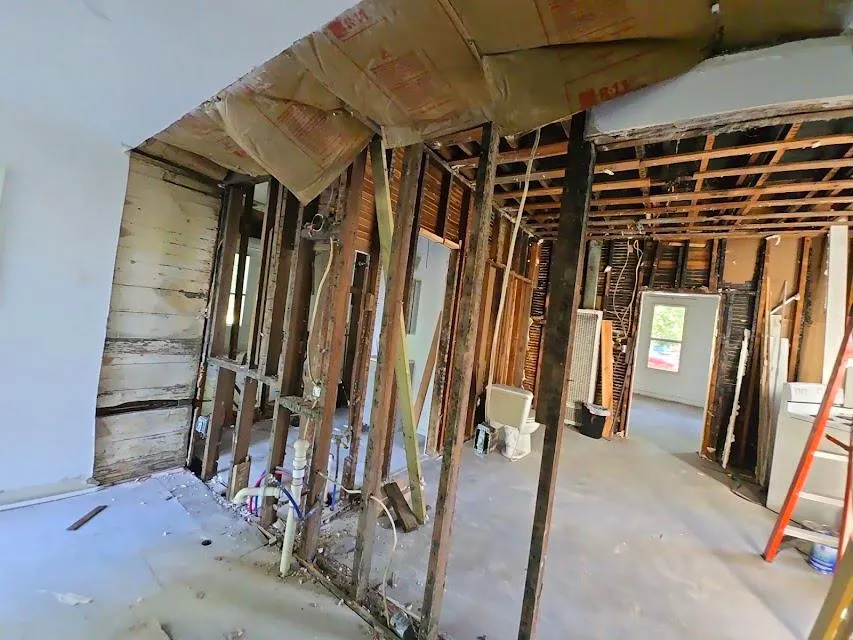
After a pipe burst or a leak, the first company on site focuses on one job: getting the water out and drying the structure. When they pick up the fans and dehumidifiers, many homeowners in Lawton and Southwest Oklahoma are left looking at drywall cut out along the bottom of the walls, flooring removed and cabinets pulled off the wall.
That is normal. Mitigation is only the first half of a water damage claim. This guide explains what comes next, who does it, and how to keep the insurance side moving.
Mitigation vs. repairs: two different jobs
Mitigation stops the damage: water extraction, removing wet materials that cannot be dried, and running drying equipment until moisture readings are back to normal. Repairs, also called reconstruction or "put-back", replace everything that was removed so the home is back to how it was before the loss.
Some companies do both. Many do only mitigation. If yours only did the drying, you will need a contractor for the repairs. See mitigation vs. reconstruction for more detail.
What to get from your mitigation company
- The final moisture readings or drying logs showing the structure is dry
- Photos taken before and during the tear-out
- A list of what was removed: drywall height, flooring, cabinets, insulation
- Their invoice or estimate sent to your insurance company
Your repair contractor will use these records to build the repair scope and to make sure nothing was missed.
What the repair phase usually includes
- Replacing insulation in exterior walls
- Hanging, taping, texturing and painting new drywall
- Repairing or replacing subfloor and installing new flooring
- Reinstalling or replacing cabinets, vanities and countertops
- Baseboards, trim, doors and final paint
How insurance handles the rebuild
Most insurers write a separate estimate for repairs, often in Xactimate. Your contractor reviews it against the actual damage and sends the adjuster photos and measurements for anything that was missed, such as damage found behind cabinets or under flooring. Many policies pay repairs in stages, and mortgage companies are often named on the check.
Every policy is different. Ask your adjuster how repair payments will be issued, and keep copies of every estimate and invoice.
How long it takes
A single room with drywall and flooring often takes one to two weeks once the scope is approved. Kitchens and multi-room repairs commonly take three to six weeks, mostly depending on cabinet and flooring lead times.
Need someone to finish the job?
ICR handles water damage repair in Lawton and Duncan, including jobs where another company did the mitigation. Call (580) 260-6801.
Need help in Lawton right now?
ICR crews respond 24/7 across Lawton, Fort Sill and Comanche County.
Frequently Asked Questions
Who does the repairs after water mitigation?
A general contractor or restoration company that does reconstruction. Some mitigation companies also do repairs; many do not. You can choose any qualified contractor for the rebuild.
Do I have to use the same company for mitigation and repairs?
No. You can use a different contractor for the repairs. Give them the drying records, photos and insurance estimates from the mitigation company.
How long after mitigation can repairs start?
As soon as the structure is confirmed dry and the repair scope is agreed with your insurer. Waiting too long with open walls can let new problems develop, so do not let it sit.
This article is general information, not legal or insurance advice. Insurance Claim Restoration is a restoration contractor, not an insurance company; coverage decisions are made by your insurer under your specific policy.