
Do You Need to Replace Drywall After Water Damage?
A leak under the sink, a burst supply line or water coming through the ceiling leaves the same question in almost every Lawton home we walk into: does this drywall have to be torn out, or can it just dry?
The honest answer is that it depends on what kind of water it was, how long the wall stayed wet and what the drywall looks like once it dries. Here is how restoration crews make that call.
When wet drywall can usually be kept
- The water was clean, such as a supply line or rain, not sewage or floodwater
- Drying started within a day or two of the leak
- The panel is still firm when you press on it and is not bulging or sagging
- Tape seams are not lifting and there is no mold on either side
- Moisture readings come back to normal after drying
In these cases the wall can often be dried in place with air movers and dehumidifiers, then primed with a stain-blocking primer and repainted.
When drywall has to be replaced
- The water was contaminated: sewage backup, toilet overflow with waste, or floodwater from outside
- The board is soft, crumbles, swells or has pulled off the screws
- Seams have separated or the ceiling is sagging
- Mold is growing on the paper facing
- Wet insulation behind it has packed down and needs to come out anyway
- The wall stayed wet for several days before anyone found it
Gypsum loses strength once it has soaked through, and mold can start within 24 to 48 hours, so a wall that stayed wet for a long time is rarely worth saving.
How high the cut usually goes
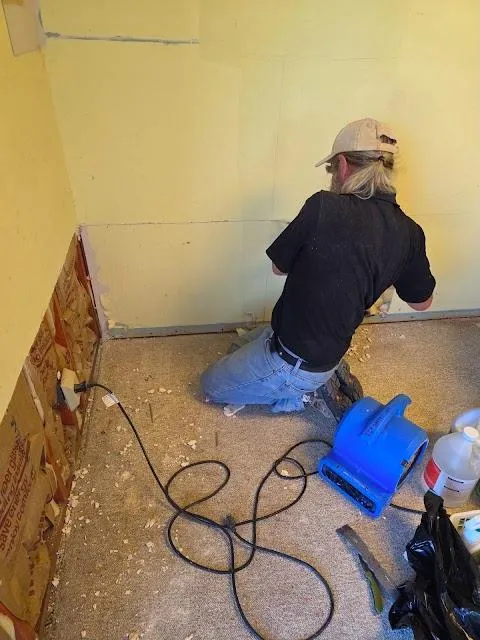
When water came up from the floor, crews make a straight "flood cut" above the highest wet point, often 2 feet for a small clean-water leak and 4 feet when the water was higher or the insulation is wet. Cutting at 4 feet lines up with a full sheet laid sideways, which makes the repair cleaner. When water came from above, the wet section of ceiling and any wall below it are opened instead.
If you are looking at a strip of missing drywall around the room after mitigation, that is the flood cut. See what happens after mitigation is done.
What the repair looks like
- Confirm the studs and wall cavity are dry
- Replace insulation on exterior walls
- Hang new drywall, tape, mud and match the existing texture
- Prime with a stain-blocking primer and paint the whole wall so the color matches
- Reinstall baseboards, trim and outlets
A single wall or ceiling patch is often done in a few days. A full room usually takes about a week because each coat of mud has to dry.
Will insurance pay for it?
If the water came from a sudden and accidental event, like a burst pipe or appliance supply line, most homeowners policies cover removing and replacing the damaged drywall, insulation, texture and paint. Slow leaks that went on for months and flooding from outside are often treated differently. Check your policy and ask your adjuster before work starts, and keep the photos and moisture readings from the mitigation company.
Drywall repair in Lawton and Duncan
ICR repairs water damaged walls and ceilings across Southwest Oklahoma, including jobs where another company did the drying. See drywall repair in Lawton or Duncan, or call (580) 260-6801.
Need help in Lawton right now?
ICR crews respond 24/7 across Lawton, Fort Sill and Comanche County.
Frequently Asked Questions
Can wet drywall dry out on its own?
Light surface wetting from clean water can dry, but a wall left to dry on its own often stays wet inside for days. That is long enough for mold to start, so use drying equipment and check it with a moisture meter.
Can I paint over water damaged drywall?
Only if the drywall is completely dry, firm and free of mold. Use a stain-blocking primer first, or the water stain will bleed through the new paint.
How much drywall should be cut out after a leak?
Enough to get above the highest wet point, usually 12 inches or more. Many crews cut at 2 or 4 feet so new sheets fit cleanly.
This article is general information, not legal or insurance advice. Insurance Claim Restoration is a restoration contractor, not an insurance company; coverage decisions are made by your insurer under your specific policy.