
How Long Does Water Damage Restoration Take?
Water damage restoration happens in stages: stopping the water, extracting it, drying the structure, and then repairing what was removed. Each stage has its own timeline, and the total depends heavily on how much water there was, what kind of water it was, and how long it sat before drying started.
This guide gives you a realistic picture so you can plan, talk with your insurer and know what to expect from your restoration company.
Stage 1: Emergency response and extraction (same day)
The first visit focuses on stopping the source, extracting standing water and setting up drying equipment. For most homes this happens within the first day. The faster extraction starts, the more materials can be dried in place instead of torn out.
Stage 2: Structural drying (usually several days)
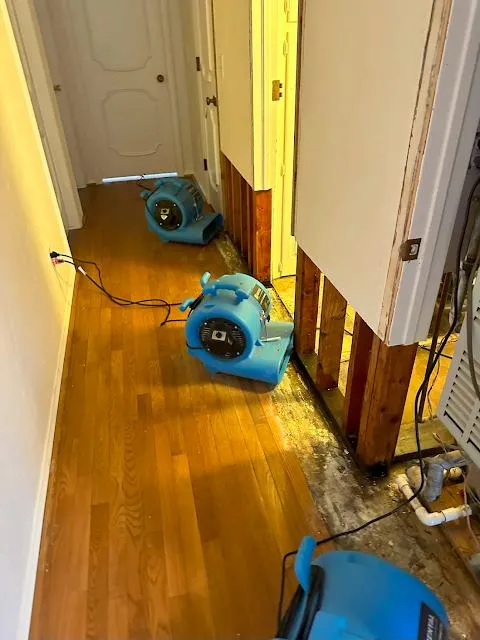
Drying is measured, not guessed. Technicians take moisture readings on walls, floors and framing and keep equipment running until materials reach normal dry levels. In many homes that takes a few days, but dense materials like hardwood, plaster and concrete can take longer.
- Clean water from a supply line usually dries faster than water that sat for days.
- Water that soaked under flooring or into wall cavities takes longer than surface water.
- Humid summer weather in Oklahoma can slow drying without enough dehumidification.
Stage 3: Removal of non-salvageable materials
Some materials cannot be dried safely — swollen particleboard, saturated carpet pad, or anything soaked with contaminated water. These are removed and documented, often during the first days of drying. Category 3 (contaminated) water, such as a sewage backup, always requires more removal.
Stage 4: Repairs and reconstruction (days to weeks)
Once everything is dry and the scope is approved by your insurer, repairs begin: drywall, insulation, flooring, cabinets, trim and paint. A small bathroom leak may need only a few days of repairs; a flooded kitchen or multiple rooms can take several weeks, especially if cabinets or specialty flooring must be ordered. ICR handles reconstruction in-house so there is no gap between drying and rebuilding.
What slows a job down
- Waiting to call — every day of delay means more tear-out and higher risk of mold
- Waiting on insurance approval for the repair scope
- Back-ordered materials such as cabinets or matching flooring
- Hidden damage found once walls or floors are opened
- Mold growth that requires mold remediation before repairs
How to keep your timeline short
Call for help as soon as you find the water, document the damage with photos, report the claim promptly and keep the drying equipment running — even if it is noisy. If you are in Lawton, Fort Sill or nearby, ICR answers 24/7 for water damage restoration.
Need help in Lawton right now?
ICR crews respond 24/7 across Lawton, Fort Sill and Comanche County.
Frequently Asked Questions
Can I stay in my home during water damage restoration?
Often yes, if the damage is limited and the water was clean. With contaminated water, major tear-out or no working kitchen or bathroom, it may be better to stay elsewhere. Ask your insurer whether your policy includes additional living expenses.
Why do the fans and dehumidifiers have to stay on?
They are what removes moisture from walls, floors and framing. Turning them off pauses drying and can extend the job or allow mold to start growing.
This article is general information, not legal or insurance advice. Insurance Claim Restoration is a restoration contractor, not an insurance company; coverage decisions are made by your insurer under your specific policy.